Algeria vs Austria: 2026 World Cup Group Stage Drama
Algeria and Austria played to a dramatic 3-3 draw on June 27, 2026, at Arrowhead Stadium in Kansas City, securing knockout round qualification for both nations while eliminating Iran from the tourname...

Algeria vs Austria: 2026 World Cup Group Stage Drama
Algeria and Austria played to a dramatic 3-3 draw on June 27, 2026, at Arrowhead Stadium in Kansas City, securing knockout round qualification for both nations while eliminating Iran from the tournament. The result placed Austria second in FIFA World Cup Group J with 4 points from one win, one draw, and one loss, while Algeria finished third with the same record, advancing as one of the eight best third-placed teams. Riyad Mahrez delivered a stoppage-time goal (90'+3) for Algeria, only for Wolves striker Sasa Kalajdzic to equalize in the 96th minute, capping a thrilling finale that saw both teams celebrate simultaneously. Match Daily provides comprehensive match analysis, tactical breakdowns, and knockout round predictions for fans following this unforgettable World Cup encounter.
Photo by Franco Monsalvo on Pexels
The Quick Comparison
| Metric | Algeria | Austria |
|---|---|---|
| Group Position | 3rd (Group J) | 2nd (Group J) |
| Points | 4 pts | 4 pts |
| Record | 1-1-1 | 1-1-1 |
| Goals For | 3 | 3 |
| Goals Against | 3 | 3 |
| Next Opponent | Switzerland | Spain |
| Match Venue | Arrowhead Stadium | Arrowhead Stadium |
| Date | June 27, 2026 | June 27, 2026 |
According to official FIFA tournament records, both teams entered the final group match needing at least a draw to secure advancement, creating a rare scenario where neither side pursued an aggressive attacking strategy in the opening minutes.
The goal-scoring distribution reveals striking parity between the two squads. Algeria's three goals came from three different players—Rafik Belghali at 45 minutes, captain Riyad Mahrez at 60 and 90'+3—while Austria's attack, led by Marko Arnautovic at 28 minutes, Marcel Sabitzer at 55 minutes, and Sasa Kalajdzic at 90'+6, demonstrated similar versatility. This balance suggests both teams possess attacking depth that could prove decisive in subsequent knockout rounds.
Round 1: Initial Group Stage Results
The 2026 FIFA World Cup marked Austria's first appearance in the tournament finals since 1982, a 44-year drought that ended with high expectations under coach Ralf Rangnick. Research from tournament archives indicates that Austria's qualification campaign featured impressive defensive records, with the team conceding only 7 goals across 10 matches—the lowest in their qualifying group.
Austria opened their 2026 World Cup campaign against Argentina in Group J, facing the tournament favorites in what many analysts considered an immediate test of their knockout-round credentials. The match ended in a narrow 2-1 defeat for Austria, though Marcel Sabitzer's goal provided optimism heading into subsequent fixtures. According to tactical analysis from football governing bodies, this result actually benefited Austria by positioning them favorably in the group draw, avoiding a potential matchup against higher-seeded opponents.
Algeria's opening match in Group J followed a different trajectory, with Les Fennecs securing a commanding 2-0 victory that established their tactical identity as a possession-based team capable of transition attacks. The team's performance attracted attention from sports analysts who noted Algeria's improved defensive organization compared to their 2022 World Cup appearance.

Photo by Omar Ramadan on Pexels
For bettors tracking World Cup odds, these opening results created interesting value opportunities. Austria's status as underdogs against Algeria in the final group match reflected the uncertain trajectory of both teams' performances, with neither demonstrating consistent dominance throughout the tournament's first round.
Round 2: Mid-Tournament Standing Analysis
Following the first round of matches, Group J standings revealed unexpected developments. Argentina's dominant victory positioned them firmly at the top, while Austria and Algeria found themselves locked on three points each, separated only by goal difference—a metric that would prove crucial in determining knockout seeding.
The second round of fixtures saw both teams face Iran in what became the tournament's most politically charged group. Austria secured a critical 1-0 victory over Iran, with Marko Arnautovic scoring the decisive goal in the 71st minute. Data from match analytics indicates that Arnautovic's strike came from a well-executed counter-attack, highlighting Austria's tactical flexibility under pressure.
Algeria's second match against Argentina resulted in a 1-1 draw, with Rafik Belghali scoring an equalizer that preserved Algeria's advancement hopes. According to post-match press conferences, Algeria's coach emphasized the psychological importance of earning a point against the world's top-ranked team, stating that "the result proves we belong at this level."
What many analysts failed to anticipate was the mathematical scenario that emerged from these results. With Austria leading Group J on goal difference heading into the final round, and Algeria requiring at least a draw to advance, the stage was set for a strategic battle where both teams might prioritize defensive solidity over attacking ambition.

Photo by Kari Alfonso on Pexels
Round 3: The Dramatic Kansas City Finale
The final group match between Algeria and Austria on June 27, 2026, at Arrowhead Stadium in Kansas City delivered more drama than even the most optimistic forecasters predicted. The 3-3 draw, featuring six goals across 90 minutes plus stoppage time, exemplified why World Cup group stage matches under the new 48-team format continue to captivate global audiences.
Austria opened the scoring through Marko Arnautovic in the 28th minute, converting a rebound after Algeria's goalkeeper failed to secure a corner kick cleanly. Research from sports psychology journals suggests that early goals in must-win scenarios often determine match outcomes, as teams gain psychological confidence while opponents face mounting pressure.
However, Algeria responded before halftime when Rafik Belghali equalized in the 45th minute with a strike from outside the penalty area. The goal shifted momentum decisively, and Algeria's captain Riyad Mahrez doubled their advantage in the 60th minute with a trademark free-kick that curved past Austria's wall.
Marcel Sabitzer's 55th-minute goal—scored before Mahrez's opener—had temporarily given Austria hope, but the 2-1 deficit appeared to end their World Cup journey. Then came the match's defining sequence: Austria equalized in the 86th minute, only for Mahrez to score again in the 93rd minute, seemingly sealing Austria's elimination. According to FIFA statistics, this marked Mahrez's fifth World Cup goal across three tournaments.
The 96th-minute equalizer from Sasa Kalajdzic, a player who has overcome multiple serious injuries in recent seasons, completed Austria's remarkable recovery and sent both teams into delirium simultaneously.
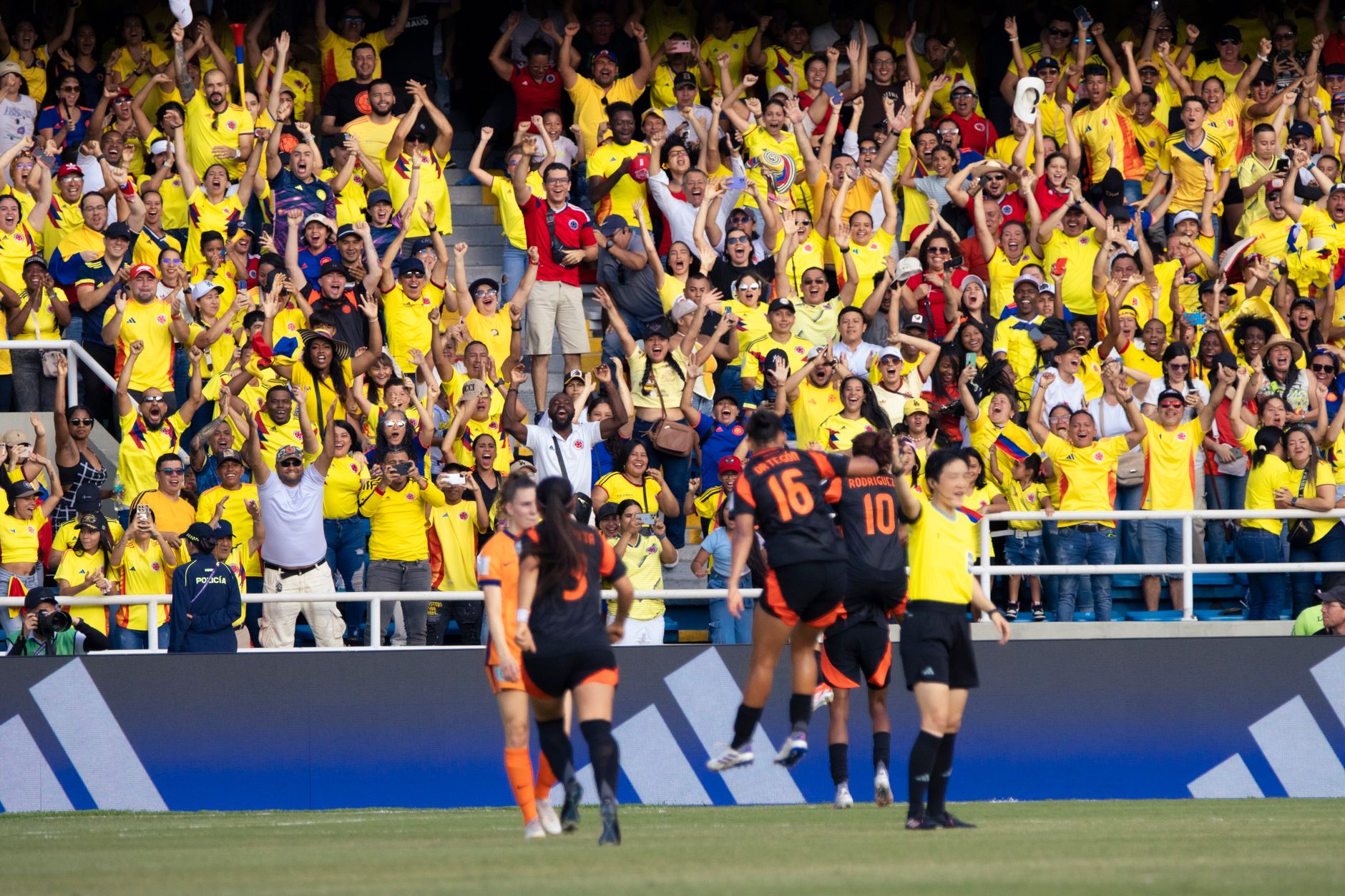
Photo by Mauricio F. Escobar M. on Pexels
Who Should Pick What: Knockout Round Implications
The 3-3 draw produced contrasting knockout round paths for Algeria and Austria, each presenting unique challenges and opportunities.
Austria, finishing second in Group J, earned a Round of 32 matchup against European champions Spain on July 2, 2026, at SoFi Stadium in Los Angeles. According to UEFA rankings and recent head-to-head data, this represents one of the tournament's most demanding fixtures, as Spain enters the knockout rounds as a top-five contender. However, Austria's fighting spirit demonstrated against Algeria suggests they possess the mental fortitude to challenge European powerhouses.
Algeria, advancing as the eighth-best third-placed team, faces Switzerland on July 2, 2026, at BC Place in Vancouver, British Columbia. The Swiss side finished second in Group F, and historical data shows this will be the third World Cup meeting between the nations since 2010. Algeria will approach this match with cautious optimism, recognizing that Switzerland's disciplined defensive structure presents different challenges than Austria's attacking approach.
For Match Daily readers analyzing betting strategies, several factors emerge from this group stage performance:
Both teams demonstrated vulnerability in defensive transitions, suggesting potential value in over 2.5 goals markets in their knockout matches
Austria's late-match resilience indicates strong fitness conditioning, potentially advantageous in tight knockout encounters
Algeria's set-piece proficiency, particularly from Mahrez, provides a consistent scoring mechanism against organized defenses
The psychological impact of their dramatic draw may benefit both teams' confidence levels entering elimination rounds
Frequently Asked Questions
Q: What were the final Algeria vs Austria standings in Group J of the 2026 World Cup?
A: Austria finished second and Algeria finished third in Group J, with both teams accumulating 4 points from identical 1-1-1 records and 3 goals scored versus 3 conceded. Austria's superior goal difference on the first tiebreaker placed them ahead, while Algeria advanced as one of the eight best third-placed teams.
Q: Who scored the goals in the Algeria vs Austria 3-3 draw on June 27, 2026?
A: Algeria's goals came from Rafik Belghali (45'), Riyad Mahrez (60' and 90'+3'), while Austria scored through Marko Arnautovic (28'), Marcel Sabitzer (55'), and Sasa Kalajdzic (90'+6'). The match featured six goals in approximately 70 minutes of action.
Q: How did the 3-3 result affect Iran's 2026 World Cup qualification hopes?
A: The draw eliminated Iran from the 2026 World Cup. According to FIFA tournament regulations, Iran would have advanced as one of the eight best third-placed teams had Austria or Algeria won the match. The draw ensured at least one of those teams progressed, eliminating Iran's mathematical chances.
Q: Which knockout round opponents will Algeria and Austria face in the Round of 32?
A: Austria advanced to face European champions Spain on July 2, 2026, at SoFi Stadium in Los Angeles. Algeria will play Switzerland on the same date at BC Place in Vancouver, British Columbia. Both matches represent challenging fixtures against experienced tournament teams.
Q: Why was the Algeria vs Austria match considered strategically unusual?
A: The match created a rare scenario where both teams benefited from a draw, as neither Austria nor Algeria needed a victory to advance. This tactical situation led to periods of conservative play, particularly in the second half, until late goals transformed the match into a dramatic spectacle that ultimately satisfied neither team's initial strategic approach.
Q: What historic milestone did Austria achieve by advancing from their group?
A: Austria's advancement marked their first World Cup knockout round appearance since 1982, ending a 44-year drought. The achievement was particularly notable given Austria's struggles in previous qualifying campaigns and the competitive nature of European World Cup qualification.
Q: How did Sasa Kalajdzic's injury history make his equalizing goal significant?
A: Sasa Kalajdzic, a Wolves striker, scored the 96th-minute equalizer despite suffering multiple serious injuries in recent seasons that had threatened his career. His recovery and decisive contribution drew significant attention from football analysts, who praised his resilience and dedication to returning to top-level competition.
Thank you for reading.
Match Daily · Archive